

Sweat Kingdom · Contrast Therapy
Sauna & Cold Plunge:
The Complete Guide to
Contrast Therapy
The science, the protocols, the optimal timing, and how to build the most effective contrast therapy system at home.
"Contrast therapy isn't a wellness trend. It's one of the most well-documented hormetic protocols in sports science — and it's been hiding in plain sight for centuries."
Scandinavian athletes have paired extreme heat with cold immersion for generations. Finnish sauna culture has always included the plunge — into snow, into lakes, into whatever cold was available. What's new isn't the practice. What's new is the science catching up to explain exactly why it works so well, and the growing body of research quantifying the specific physiological adaptations it drives.
If you're reading this, you're probably already sold on the concept. This guide skips the basics and goes straight to the mechanisms, the protocols, and the variables that matter — temperature, timing, sequencing, frequency — so you can build a contrast therapy routine that actually delivers the outcomes you're after.
The Physiological Mechanism —
Why Contrast Therapy Works
Contrast therapy — alternating between high heat and cold immersion — works through a principle called hormesis: the biological phenomenon where controlled, short-term stress triggers adaptive responses that make the organism more resilient. Heat and cold are both hormetic stressors. Used separately, each produces significant benefits. Used together in a deliberate contrast protocol, the effects compound in ways that neither produces alone.
What heat does to the body
At 170–200°F, core temperature rises rapidly, triggering a cascade of cardiovascular and neurological responses. Heart rate elevates to levels comparable to moderate aerobic exercise. Blood vessels dilate dramatically, increasing peripheral blood flow. Heat shock proteins are synthesized, playing a critical role in cellular repair and protein homeostasis. Endorphins and growth hormone are released. The parasympathetic nervous system begins to downregulate, producing deep systemic relaxation.
Heat shock proteins (HSPs) — particularly HSP70 and HSP90 — are molecular chaperones that protect cells from damage and assist in protein repair. Repeated sauna use significantly upregulates HSP expression, which researchers believe contributes to the longevity and cardiovascular benefits documented in long-term traditional sauna users.
A 20-year Finnish cohort study of 2,315 men found that those using traditional sauna 4–7 times per week had 40% lower all-cause mortality, 48% lower risk of fatal coronary heart disease, and 65% lower risk of Alzheimer's disease compared to once-weekly users.
What cold does to the body
Cold water immersion at 50–59°F triggers an immediate sympathetic nervous system response — norepinephrine surges, heart rate briefly spikes, peripheral vasoconstriction kicks in. Blood is shunted away from the extremities toward core organs. Brown adipose tissue activates, generating thermogenic heat. Most significantly for recovery and mental performance, norepinephrine levels increase by 200–300% and dopamine by up to 250% — effects that persist for hours after the cold exposure ends.
Why combining them amplifies both
The vascular response is the key mechanism behind contrast therapy's superiority over either modality alone. Heat causes maximum vasodilation — vessels are as open as they get. Cold causes rapid vasoconstriction — vessels clamp down. Alternating between them creates what's sometimes called a "vascular pump" effect: repeated expansion and contraction of the blood vessels drives significantly enhanced circulation, lymphatic drainage, and metabolite clearance compared to either heat or cold in isolation.
The contrast is the therapy. Heat opens. Cold closes. Repeat the cycle and you've created a cardiovascular training stimulus that no single modality can replicate.
Temperature — The Numbers That Matter
Temperature is the most important variable in a contrast therapy protocol. Both the heat and cold need to be at the right range to drive the physiological responses described above — and the margins are tighter than most people think.
Sauna temperature for contrast therapy
For contrast therapy purposes, your sauna needs to reach and hold 170–200°F. This is non-negotiable if you want the full hormetic heat response. Below 160°F, the cardiovascular stimulus is minimal, heat shock protein synthesis is limited, and growth hormone release is significantly blunted. This is why traditional Finnish-style saunas — not infrared — are the appropriate tool for contrast therapy. Infrared saunas operate at 120–140°F and cannot produce the physiological responses the research documents.
Cold plunge temperature for contrast therapy
The research on cold water immersion identifies 50–59°F (10–15°C) as the optimal range for driving the norepinephrine and dopamine response. Below 50°F, the cold shock response becomes so intense that most people cannot maintain the calm breathing required to access the parasympathetic benefits. Above 60°F, the stimulus is insufficient to drive significant catecholamine release.
For contrast therapy specifically — as opposed to isolated cold exposure — the cold plunge duration is typically shorter (2–3 minutes per cycle) since the preceding heat exposure pre-loads the vascular and thermoregulatory response.
Advanced practitioners: 50–55°F for 2–3 minutes per cycle. Intermediate: 55–59°F for 2–4 minutes. Starting out: 60–65°F for 1–2 minutes and work down over weeks. Cold adaptation is real — what feels brutal in week one feels manageable by week four.
Contrast Therapy Protocols
The sequencing, duration, and number of cycles in a contrast therapy session are variables you can optimize for specific outcomes. Here are three evidence-informed protocols for different goals.
-
1Enter sauna at 180–190°F. Sit for 15–20 minutes. Focus on controlled nasal breathing. The goal is sustained heat exposure — not endurance.
-
2Exit and enter cold plunge at 50–59°F immediately. Immerse fully. Hold for 2–3 minutes. Maintain slow, controlled breathing throughout.
-
3Exit cold plunge. Rest at room temperature for 5 minutes. Allow heart rate to normalize.
-
4Repeat heat/cold cycle 2–3 times total.
-
5End on cold. Post cold exposure, norepinephrine and dopamine remain elevated for 2–4 hours — ending cold preserves this effect.
-
1Morning session — ideally within 1 hour of waking. Sauna at 175–185°F for 12–15 minutes.
-
2Cold plunge at 50–55°F for 2–3 minutes. The morning cold plunge produces the most significant dopamine spike due to cortisol synergy in the early morning window.
-
3Return to sauna for 10 minutes.
-
4Final cold plunge for 2 minutes. End here.
-
5Do not shower with hot water immediately after — this blunts the norepinephrine response.
-
1Sauna at 185–200°F for 20 minutes. Add steam (löyly) once or twice during the session for additional cardiovascular stimulus.
-
2Cold plunge or cold shower at 50–60°F for 2–3 minutes.
-
3Rest period — 10–15 minutes seated at room temperature. This rest phase is important for the cardiovascular training effect.
-
4Repeat 2–3 cycles.
-
5Hydrate aggressively — 16–24oz of water per session minimum.
Contrast Therapy Benefits — What the Research Shows
-
Accelerated muscle recovery and reduced DOMS — The vascular pump effect of contrast therapy clears metabolic waste, reduces inflammatory markers, and accelerates tissue repair significantly faster than passive recovery. Multiple studies show contrast water therapy reduces perceived soreness and biomarkers of muscle damage at 24 and 48 hours post-exercise.
-
Dramatic neurochemical effects — sauna dopamine and cold plunge dopamine — Cold exposure alone produces a 250% increase in dopamine that can last 2–4 hours. Heat produces significant endorphin release. The combination creates a neurochemical state that users consistently describe as clear, focused, and motivated — without the crash associated with stimulants.
-
Cardiovascular conditioning and sauna cardiovascular health — The vascular training effect of repeated heat/cold cycling adapts the endothelium and improves vascular elasticity over time. Combined with the documented cardiovascular benefits of regular traditional sauna use, contrast therapy is one of the most potent non-pharmacological cardiovascular health interventions available.
-
Improved sleep quality — Evening contrast therapy sessions trigger a pronounced parasympathetic rebound after the sympathetic activation of cold exposure. Core body temperature drops significantly in the hours following a session, which is a primary driver of sleep onset and deep sleep duration.
-
Immune system modulation — Regular contrast therapy has been shown to increase natural killer cell activity and modulate inflammatory cytokines. Some research suggests it reduces the frequency and duration of upper respiratory illness in regular practitioners.
-
Metabolic effects and sauna weight loss — Cold exposure activates brown adipose tissue, increasing metabolic rate and caloric expenditure. Combined with the cardiovascular conditioning effect of heat, contrast therapy contributes meaningfully to metabolic health over time — though it works as a complement to active lifestyle, not a standalone weight loss intervention.
-
Nervous system regulation and stress resilience — Perhaps the most underappreciated benefit: regular contrast therapy trains the autonomic nervous system. Practitioners consistently report improved stress tolerance, faster recovery from psychological stressors, and reduced baseline anxiety — likely through repeated conditioning of the sympathetic/parasympathetic response.
Building Your Home
Contrast Therapy Setup
The biggest barrier to consistent contrast therapy practice isn't motivation — it's friction. Driving to a facility, waiting for equipment, sharing the space with strangers. Every one of those friction points reduces the likelihood of actually doing it. A home contrast therapy setup eliminates all of them.
At Sweat Kingdom we manufacture traditional saunas and supply commercial-grade cold plunges — giving you everything you need to build a complete contrast therapy system at home. Here's what we'd recommend:
Sweat Kingdom is launching a commercial-grade cold plunge lineup designed to pair with our sauna units. Precision temperature control, commercial filtration, and the build quality you'd expect from a USA manufacturer. Contact our team to get on the early access list.
Setup considerations for contrast therapy
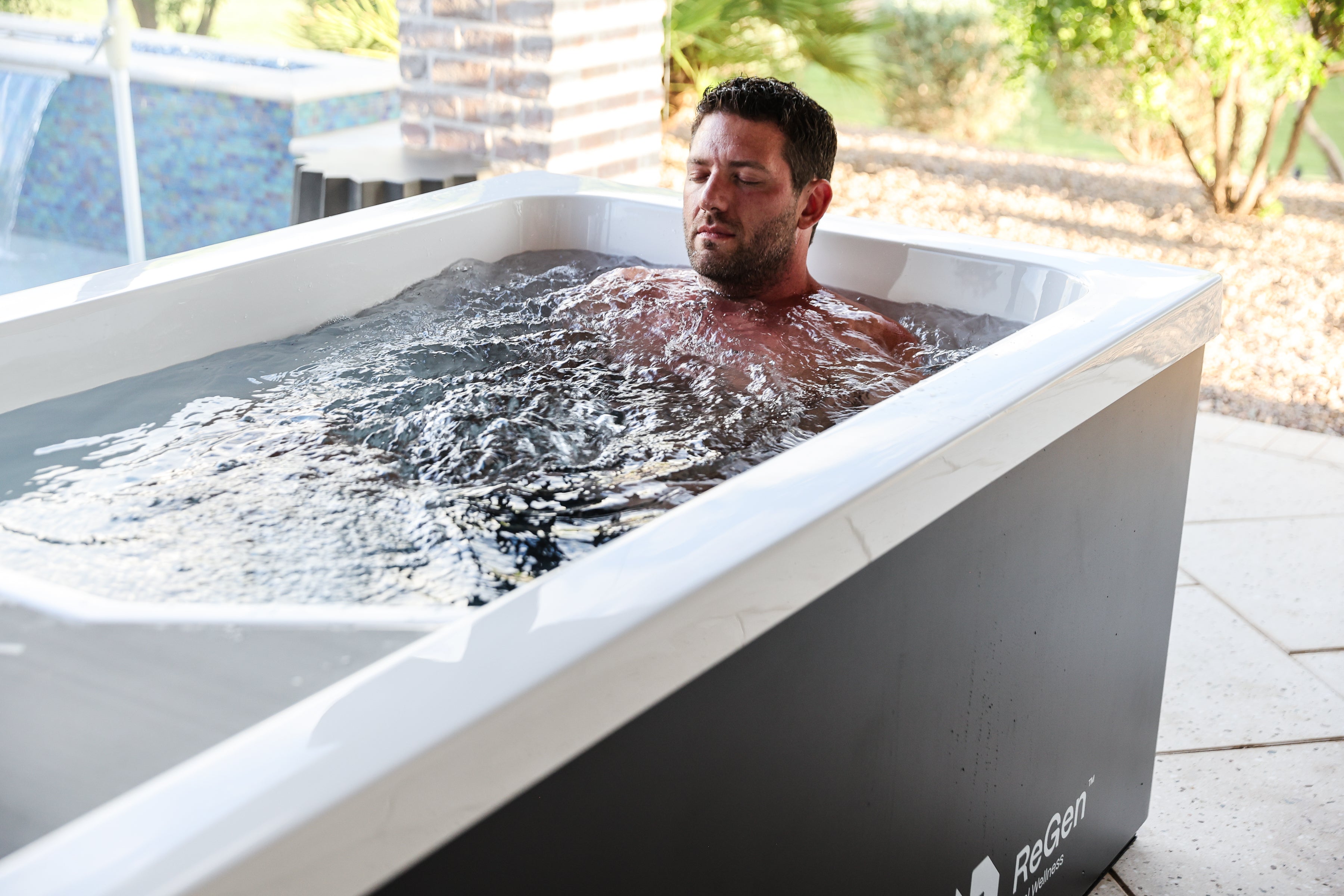
For the most effective contrast therapy experience, you want the transition from sauna to cold plunge to be as fast as possible — ideally under 30 seconds. This means placing your cold plunge adjacent to your sauna, ideally within a few steps. Outdoor setups work particularly well for this since there are no doorways or tight spaces to navigate during the transition.
For electrical, your sauna requires a dedicated hardwired connection. Most customers pay $500–$1,500 for the electrical run depending on distance from the panel. The cold plunge requires a standard outlet for the chiller unit. Both can typically be handled in a single electrician visit.
Frequently Asked Questions
These are the questions we hear most often about sauna and cold plunge contrast therapy — answered directly.
-
Should you end on hot or cold in contrast therapy?End on cold if your goal is mental performance, dopamine, and focus — the norepinephrine spike from cold exposure persists for 2–4 hours and is blunted if you return to heat afterward. End on heat if your goal is sleep and relaxation — the parasympathetic rebound from heat is stronger and the drop in core temperature that follows promotes sleep onset.
-
How long should you stay in the sauna before cold plunge?15–20 minutes at 170–200°F is the standard recommendation for contrast therapy. This is long enough to drive full cardiovascular dilation, heat shock protein synthesis, and core temperature elevation without excessive dehydration. Shorter sessions (10–12 minutes) work for 3-cycle protocols where total session time is a constraint.
-
How cold should a cold plunge be for contrast therapy?50–59°F (10–15°C) is the research-supported range for driving significant norepinephrine and dopamine release. Above 60°F the stimulus is insufficient; below 50°F the cold shock response becomes difficult to manage for most people. Start at 60°F and work down over several weeks of consistent practice.
-
How many cycles of hot and cold should you do?2–3 cycles is the standard recommendation backed by most of the sports science research. More cycles don't necessarily produce proportionally greater benefits and add significant session time. A 3-cycle protocol with 15 minutes heat, 3 minutes cold, and 5 minutes rest per cycle takes approximately 70 minutes total — manageable as a daily practice.
-
Is contrast therapy better than ice bath alone?For most outcomes — recovery, neurochemical effects, cardiovascular health — yes. The vascular pump effect of alternating heat and cold produces greater circulation enhancement and metabolite clearance than cold alone. Cold alone is more practical when time is a constraint. For pure dopamine and norepinephrine optimization, cold alone can be as effective as contrast therapy if the temperature and duration are correct.
-
Can you do contrast therapy every day?Yes — daily contrast therapy is well-tolerated by most people and is in fact the approach associated with the greatest long-term benefits in the Finnish research. Start with 3–4 sessions per week and build to daily over 4–6 weeks as your cold and heat tolerance improves.
-
Does contrast therapy help with weight loss?Indirectly, yes. Cold exposure activates brown adipose tissue and increases metabolic rate. The cardiovascular conditioning effect of regular sauna use mirrors aerobic exercise in some respects. However, contrast therapy works as a complement to an active lifestyle and proper nutrition — not as a standalone weight loss intervention. The more significant benefits are in recovery, performance, and neurological health.
Build Your Contrast Therapy
Setup at Home
USA made traditional saunas that reach 200°F — the foundation of any serious contrast therapy practice.
Shop Saunas Talk to Our Team


